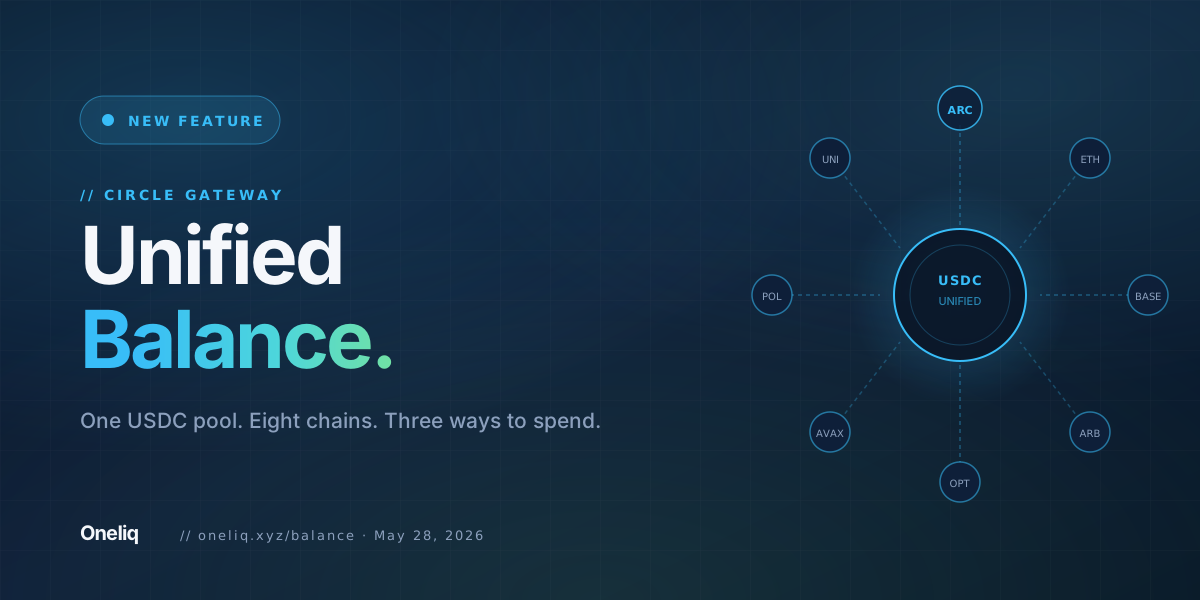
Balance is Oneliq's interface to a chain-agnostic USDC pool backed by Circle Gateway. Instead of bridging manually before every payment, you hold USDC wherever it lands and spend it as one number. Oneliq figures out which chains to draw from and, whenever it can, packs the whole movement into one signature.
What it is
When you deposit USDC into Unified Balance, the token is held in Gateway's escrow on the source chain and your balance increases by that amount. From that point the balance is chain-agnostic. It does not live on Arc, or Base, or Arbitrum. It lives in the pool, redeemable on any chain where Gateway is deployed.
This removes the fragmentation that appears when the same asset is stranded in separate wallets on separate chains. Instead of tracking eight balances, you track one. Oneliq is built directly on the Circle Gateway protocol (deposit, burn intent, attestation, mint), so it owns the full orchestration: source selection, fee handling, cross-chain settlement, and gasless delivery.
Spend
The core action. You enter a recipient, an amount, and a destination chain, and Oneliq handles the sourcing. Three modes cover the range from "just do it" to "I want full control."
The default. Oneliq selects source chains for you, available-USDC first. When no single chain holds enough, it aggregates several into one BurnIntentSet and settles in a single signature. You never think about where the money comes from.
Spend entirely from one chosen source chain. Simple and predictable when you already know which balance you want to draw down first.
Allocate the sources yourself, chain by chain. Full control over exactly how the balance is composed for users who want to decide each leg.
Before you sign, Oneliq shows the route, the per-intent fee, and the recipient outcome. Cost is visible up front, not a surprise inside the wallet popup. All three modes deliver a standard USDC transfer to the recipient. The difference is upstream only.
⇉ Batch Pay
Pay many recipients at once from the Unified Balance. Each recipient gets its own address, amount, and destination chain. Oneliq runs a non-overlapping allocation across your balances so no chain's funds are ever double-spent, then groups recipients by destination chain: one signature per destination.
Recipients that all land on the same chain settle in a single signature. If your payout spans several destination chains, that becomes one signature per chain, processed one click at a time. It is built for payroll, contributor payouts, or fanning funds out to a set of wallets without a bridge in between.
⤵ Consolidate
The mirror of Batch Pay. Instead of paying out, you sweep everything back in. Consolidate drains the spendable balance from every chain except your chosen destination onto that one chain, in a single signature. It reuses the same multi-source engine as Auto spend, with the recipient set to your own wallet.
Chains whose balance is too small to clear their fee floor are skipped automatically and listed in the preview, rather than failing the whole sweep. Use Consolidate to tidy up dust across chains, or to stage liquidity on the chain you need next.
Why it works this way
- One signature, not one per chain. Auto spend, Batch Pay (per destination), and Consolidate all collapse multi-chain movement into a single EIP-712 signature.
- Gasless delivery. Oneliq routes the destination mint through Circle's Forwarding Service, so the recipient receives USDC without holding gas first. The per-intent source burn fee is separate and always applies.
- Honest liquidity states. When a spend can't be fully covered, Oneliq tells you why: insufficient balance, no viable route, or needs aggregation across sources. Not a generic error.
Supported chains
Unified Balance on Oneliq is connected to eight testnets. Deposits from any of these networks enter the same pool, and any spend can settle to any of them.
| Network | Chain ID |
|---|---|
| Arc Testnet | 5042002 |
| Avalanche Fuji | 43113 |
| Base Sepolia | 84532 |
| Ethereum Sepolia | 11155111 |
| Optimism Sepolia | 11155420 |
| Arbitrum Sepolia | 421614 |
| Polygon Amoy | 80002 |
| Unichain Sepolia | 1301 |
One pool. Eight chains. One signature.
Spend, Batch Pay, and Consolidate are live on Oneliq. Deposit USDC from any supported testnet and move it however you need.
Open Balance Try TradeOneliq is a non-custodial frontend currently on testnet networks. Unified Balance is powered by Circle Gateway. Nothing here is real money or financial advice. We don't custody funds; you always retain control of your wallet.